
 EN
EN

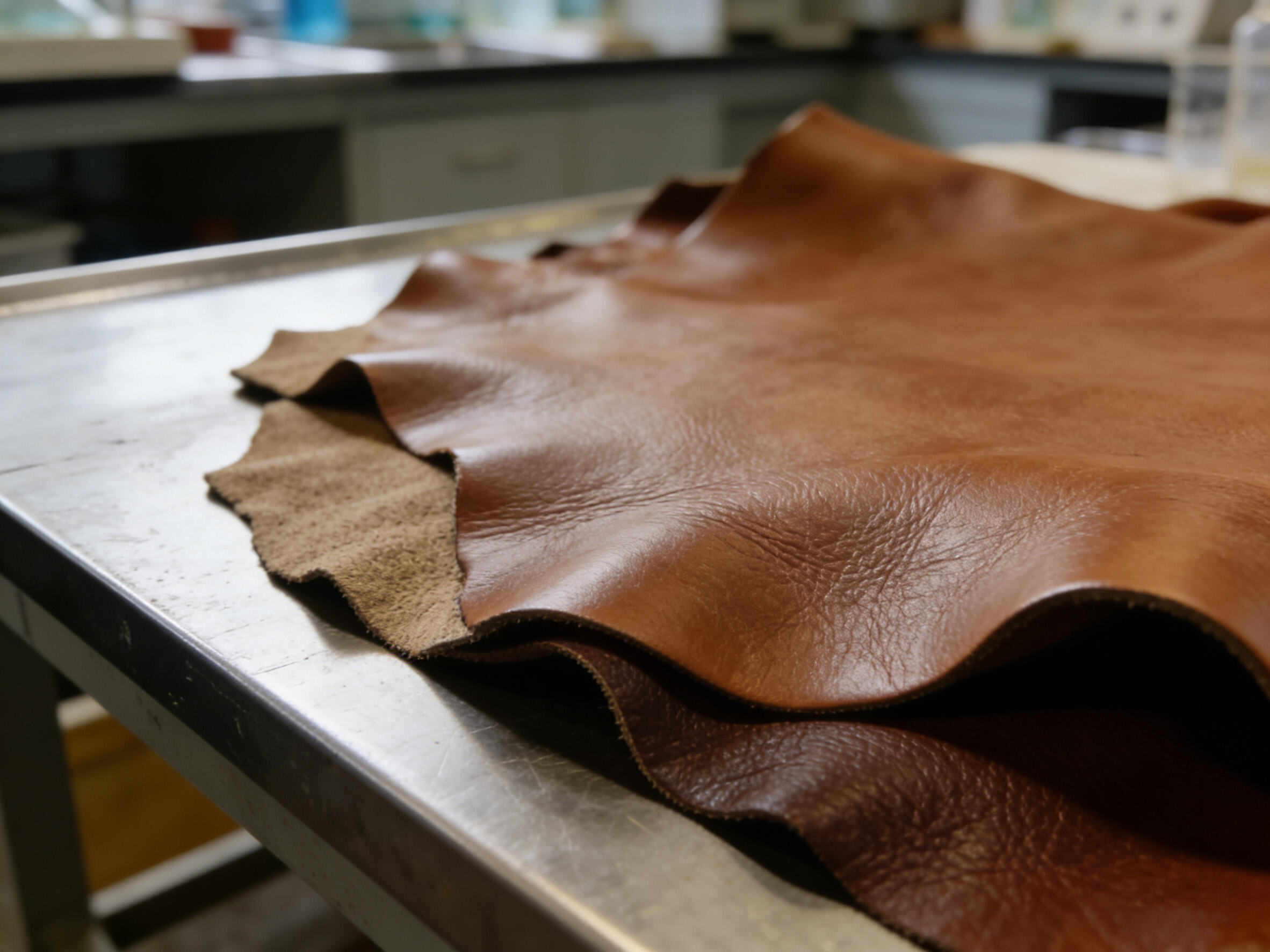
What Is Basic Chromium Sulfate? Structure, Speciation, and Hydrolytic Behavior
Molecular composition and polymeric nature of basic chromium sulfate
Basic chromium sulfate (Cr(OH)SO4) gets formed when chromium(III) oxide undergoes controlled sulfation reactions. What makes this compound interesting is that it doesn't behave like a regular salt at all. Rather than existing as individual molecules, it actually forms these complex structures called polynuclear complexes. We typically see them as dimers or even tetramers where multiple Cr(III) atoms connect through hydroxyl bridges while also coordinating with sulfate ions. This unique polymer-like structure explains why basic chromium sulfate works so well in leather tanning processes. The way these metal centers bind across multiple points creates really strong connections with collagen proteins in animal hides. Industry tests show that these structures stay intact even when heated to around 200 degrees Celsius, which is pretty important for manufacturers who need materials that can withstand standard processing temperatures without breaking down.
pH-dependent hydrolysis and speciation: from monomeric to polynuclear Cr(III) complexes
How basic chromium sulfate breaks down in water determines what forms it takes in solution. When the pH drops below 2.5, we see mostly the simple aquo complex [Cr(H2O)6]3+. Raise the pH a bit and things start changing as protons get stripped away, leading to more complex and clustered forms. The sweet spot for leather tanning lies between pH 3.5 and 4.0 where polynuclear cations like [Cr3(OH)4]5+ become prevalent. These clusters bind really well with collagen in animal hides. Research from Pouillard back in 2003 showed around 85% of dissolved chromium turns into these oligomers right around that pH range. Once pH climbs past 5 though, chromium hydroxide starts forming fast, which means less usable Cr(III) ions floating around and poor tanning results. Maintaining this tight pH band is absolutely critical because it affects how tightly the chromium bonds with collagen, and that directly impacts how stable the finished leather will be when exposed to heat and moisture.
How Basic Chromium Sulfate Reacts with Collagen: Coordination and Ligand Exchange
Binding sites on collagen: carboxylate, amino, and imidazole groups as Cr(III) ligands
When basic chromium sulfate comes into contact with collagen, it forms bonds through Cr(III) coordination at several important points. The main players here are carboxylate groups (-COO-) found in aspartic and glutamic acid residues, which act as the primary attachment points. Secondary bonding occurs at amino (-NH2) groups from lysine and hydroxylysine molecules, plus the imidazole nitrogen atoms in histidine. These multiple binding sites allow the chromium ions to connect different collagen chains together, strengthening the overall fiber structure. Interestingly, studies show that carboxylate groups handle about 70% of all initial chromium binding within collagen matrices. Recent work published in the Journal of Leather Science back in 2022 confirms this finding using advanced spectroscopy techniques, highlighting just how significant these specific interactions really are in the leather tanning process.
Sulfate/hydroxide displacement mechanism during collagen coordination
Tanning proceeds through a pH-driven ligand exchange process in which sulfate and hydroxide ligands on Cr(III) complexes are progressively replaced by collagen’s native functional groups:
- Initial adsorption: Cationic Cr(III)-sulfate-hydroxide species electrostatically attach to negatively charged collagen surfaces
- Ligand substitution: Carboxylate and amino groups displace sulfate ions, forming stable Cr–OOC–collagen and Cr–NH{nbsp;}–collagen bonds
- Olation and crosslink formation: Released OH{nbsp;} ligands facilitate Cr–OH–Cr bridging between neighboring collagen fibrils
This mechanism peaks in efficiency between pH 3.8 and 4.2, where polynuclear Cr(III) species dominate and ligand lability is optimized. The resulting coordination network elevates leather’s shrinkage temperature above 100°C—signifying effective hydrothermal stabilization.
From Binding to Tanning: Crosslinking, Stability, and Performance Outcomes
Cr(III)-mediated intra- and inter-fibrillar crosslinks and thermal stabilization
Moving from simple molecular binding to actual functional tanning depends largely on crosslinking mediated by chromium III ions. What happens here is pretty interesting: these special coordination bonds create connections inside single collagen molecules (we call them intra-fibrillar) and also link up neighboring collagen fibrils together (those are the inter-fibrillar bridges). When all these connections form a three dimensional network, they basically stop the molecules from slipping around or breaking down when exposed to heat and moisture. This makes the material much more resistant to high temperatures. Good quality tanned leather can actually hold up against boiling water without falling apart, which is really the gold standard for knowing that the collagen has been properly stabilized through this process.
Impact of basification on coordination saturation and shrinkage temperature (Ts)
When we talk about basification, what we're really referring to is raising the pH level during the tanning process. This actually makes chromium work better at creating those important crosslinks because it helps replace hydroxides in Cr(III) complexes. What happens next is pretty interesting - these changes boost the positive charge on the molecules and make them more willing to let go of their ligands. That means they can form much more complete connections throughout all those carboxylate and amino sites in collagen. The end result? A lot more crosslinks between fibers, which directly affects something called the shrinkage temperature or Ts for short. Ts measures how stable leather stays when exposed to heat and moisture. With good basification practices, this temperature usually jumps around 60 to 70 degrees Celsius compared to regular untreated hides. This big increase shows that there's been some serious structural changes happening deep within the collagen framework that just won't reverse itself.
FAQ
What is basic chromium sulfate used for?
Basic chromium sulfate is primarily used in the leather tanning industry to help stabilize animal hides during the tanning process by forming strong crosslinks with collagen fibers.
How does pH affect basic chromium sulfate in tanning?
The pH significantly impacts basic chromium sulfate’s effectiveness in tanning. The ideal range for tanning is between 3.5 and 4.0, where polynuclear complexes form best.
What are the main binding sites for chromium on collagen?
Carboxylate, amino, and imidazole groups on collagen serve as key Cr(III) binding sites.