
 EN
EN

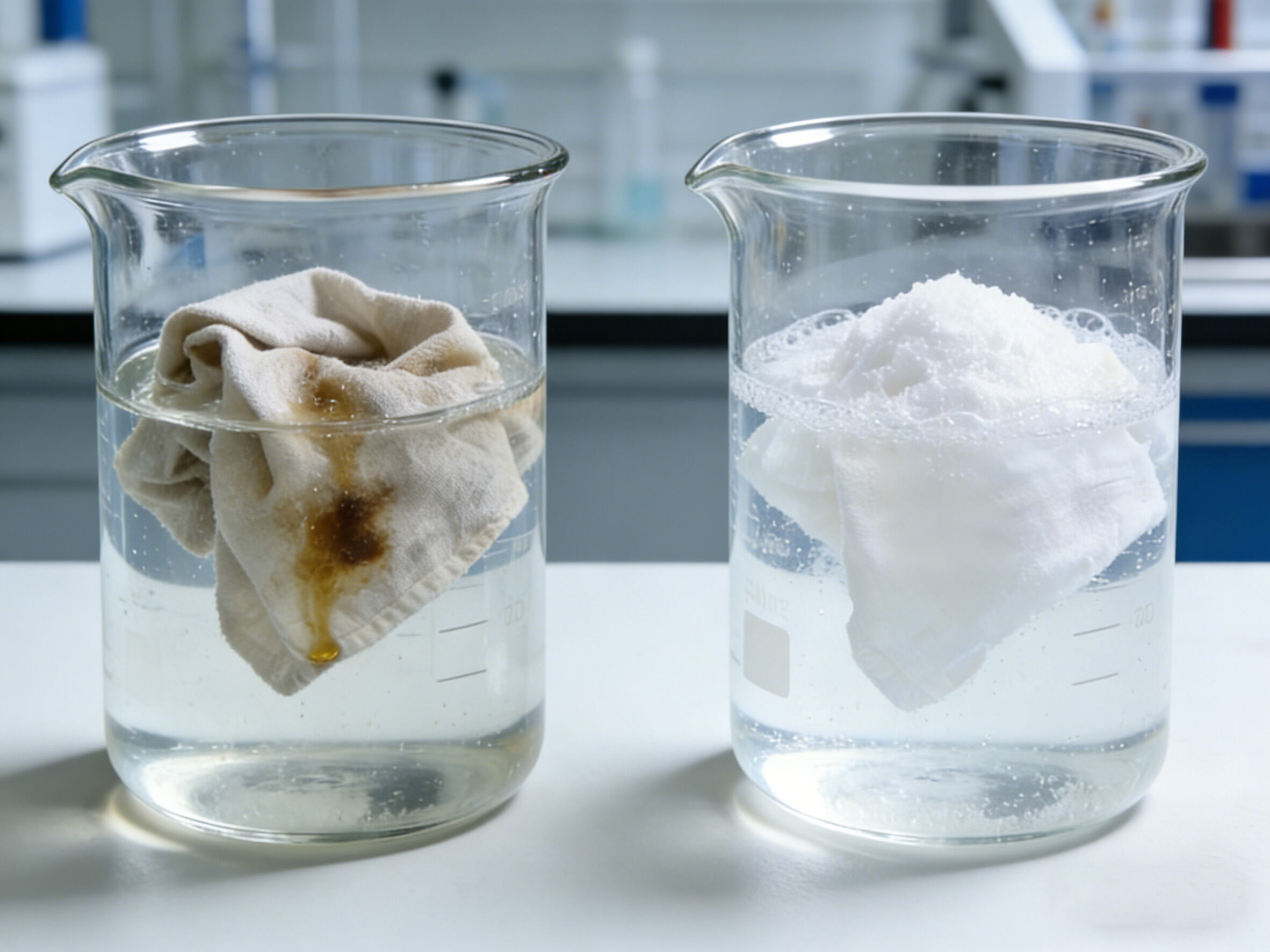
Sodium Carbonate as a pH Regulator and Alkalinity Booster
Mechanism of alkaline hydrolysis for breaking down protein and ester-based soils
Sodium carbonate elevates wash water alkalinity, initiating alkaline hydrolysis—a key reaction that cleaves peptide bonds in proteins and ester linkages in fats and oils. This converts insoluble soils into soluble fragments readily rinsed away, enhancing cleaning without aggressive solvents.
Optimal pH range (10.5–11.5) enabling surfactant efficiency and enzyme compatibility
Keeping the pH level between about 10.5 to 11.5 really boosts how well detergents work. At this sweet spot, the surfactants create those stable little clusters called micelles that keep dirt suspended properly. Meanwhile, the protease and lipase enzymes stay active at around 80%, which is way better than what happens when pH goes above 12 where their activity drops below 40%. Another benefit of this pH range is that it stops calcium carbonate from building up on clothes and inside washing machines. This means fabrics stay in good condition longer and the machines themselves last much longer without getting clogged up with mineral deposits.
Balancing alkalinity: trade-offs between cleaning power, fabric safety, and enzyme stability
While elevated alkalinity improves grease removal, excessive pH (>11.5) risks cotton fiber strength loss (≈15%), irreversible enzyme denaturation, and skin irritation in manual applications. To mitigate these, formulators blend sodium carbonate with buffering agents like sodium silicate or citrates—achieving robust soil removal while safeguarding fabrics, biological actives, and user safety.
Sodium Carbonate in Water Softening and Hardness Control
Precipitation of calcium and magnesium ions as insoluble carbonates
When sodium carbonate gets mixed into hard water, it works by pulling out those pesky calcium (Ca²⁺) and magnesium (Mg²⁺) ions from the water. These minerals form solid carbonates that sink to the bottom instead of staying dissolved. The main ones created are calcium carbonate (CaCO₃) and something called basic magnesium carbonate (Mg₅(CO₃)₄(OH)₂·4H₂O). Once these crystals settle down, they stop getting in the way of cleaning products. That means no more stubborn soap scum building up on shower walls, clothes feeling stiff after washing, or soap not lathering properly. For best results, this process needs water with a pH over 10 because that's when there's enough carbonate ions (CO₃²⁻) floating around to grab onto the minerals quickly. Water treatment plants carefully measure how much sodium carbonate to add so all the hardness goes away but they don't end up with too much leftover sodium in the water that people eventually rinse off.
Real-world performance: 40–60% cleaning efficiency gain in hard water (250–400 ppm CaCO₃)
In hard water conditions (250–400 ppm CaCO₃), sodium carbonate delivers a 40–60% improvement in soil removal versus non-softened systems. This gain stems from preventing surfactant deactivation—freeing active ingredients to emulsify oils and suspend particulates unimpeded.
| Water Hardness (ppm CaCO₃) | Cleaning Efficiency Gain | Primary Benefit |
|---|---|---|
| 250–300 | 40–50% | Improved stain lift |
| 300–400 | 50–60% | Reduced detergent consumption |
At 350 ppm—a common benchmark for moderately hard water—formulations achieve optimal cost-performance balance, cutting detergent use by up to 30% without compromising hygiene or fabric care.
Sodium Carbonate-Driven Saponification for Grease and Oil Removal
Sodium carbonate works really well at cutting through grease and oil because it goes through a process called saponification. Basically, its alkaline nature breaks down those fatty substances like cooking oils and animal fats into glycerol plus soap molecules that dissolve in water. Once these soaps are formed, they help mix with greasy stuff that normally repels water, making it easier for cleaning agents to grab onto dirt and pull it away from surfaces. Even when washing clothes in cold water where enzymes don't work as fast, sodium carbonate still does a decent job. Research indicates that products containing around 10% or more sodium carbonate can remove about three quarters to almost all of the grease, which beats out similar products without any carbonate at all. The chemical reactions speed up as temperatures rise too, roughly doubling their effectiveness when moving from 30 degrees Celsius to 50 degrees. That makes sodium carbonate particularly useful for big scale laundry operations and tough cleaning jobs. Today's detergent manufacturers have figured out how to get the most out of this ingredient by combining just the right amount of carbonate with other helpful additives like enzymes and substances that bind to minerals, helping tackle stubborn stains that regular cleaners struggle with.
Light vs. Heavy Soda Ash: Selecting the Right Sodium Carbonate Grade for Detergent Formulations
Impact of particle size and dissolution rate on pH kinetics and manufacturing consistency
When light soda ash with its fine particles gets mixed in, it dissolves quickly and creates a sudden jump in pH levels. This makes it great for breaking down tough soils fast through alkaline reactions. On the flip side, heavy soda ash comes in coarser granules that take their time dissolving. This slower dissolution keeps the pH range around 10.5 to 11.5 for longer periods, which helps enzymes work consistently throughout the entire washing process and removes dirt evenly from fabrics. The particle size matters quite a bit in manufacturing too. Heavier grades of soda ash don't separate as much when blended with other powders, so each batch turns out similar to the last one. Lighter grades can be problematic though, often creating dust issues and leading to product loss during handling. Most formulators pick between these options depending on what they need. Light soda ash works best for intense pre-soak treatments or concentrated liquid formulas. Heavy soda ash is typically chosen for powders that need stability over extended washing cycles.
FAQ Section
What is sodium carbonate used for in cleaning?
Sodium carbonate is primarily used as a pH regulator and alkalinity booster in cleaning applications. It enhances detergent performance, facilitates the removal of grease and oils through saponification, and acts as a water softener by precipitating calcium and magnesium ions.
Why is the pH range of 10.5 to 11.5 ideal for cleaning?
This pH range optimizes detergent efficacy and enzyme activity, maintaining fabric integrity and preventing mineral buildup within washing machines.
How does sodium carbonate help in water softening?
In water softening, sodium carbonate removes calcium and magnesium ions by forming insoluble carbonates, which prevents issues like soap scum and allows detergents to work more effectively.
What is the difference between light and heavy soda ash?
Light soda ash dissolves rapidly and increases pH quickly, ideal for intense cleaning, while heavy soda ash dissolves more slowly, providing consistent pH levels, and is better for extended washing cycles.