
 EN
EN

Medical and Pharmaceutical Applications of Ferrous Sulfate
First-line treatment and prevention of iron-deficiency anemia across populations
Ferrous sulfate is still considered the go-to treatment worldwide for iron deficiency anemia because it gets absorbed well by the body, works reliably, and doesn't cost much. According to World Health Organization data, about 9 out of 10 people who take their medication regularly see improvements in their blood hemoglobin levels within three months. This makes ferrous sulfate especially valuable in places with limited medical resources, where nearly half of all pregnant women and almost half of young children suffer from anemia. The way this compound behaves in the body allows doctors to prescribe smaller doses compared to other options yet still achieve good results. Found in tablet form, liquid solutions, and even IV versions, ferrous sulfate can handle various situations ranging from simple cases managed at home to more severe conditions requiring hospital treatment. Plus, since it's available without a prescription in many areas, people can start getting help sooner rather than waiting for doctor approval.
Critical role in prenatal iron supplementation and CKD-related anemia management
Most medical guidelines point toward ferrous sulfate as the go-to option for adding iron during pregnancy, typically suggesting around 30 to 60 milligrams of actual iron each day. Studies indicate this approach can cut down on early births by roughly twenty percent. For people dealing with chronic kidney issues, ferrous sulfate remains a core part of iron replacement therapy when used together with those ESA drugs that boost red blood cell production. Research shows that fixing either functional or absolute iron deficiencies using ferrous sulfate actually means patients need about thirty percent fewer ESA treatments over time, which cuts down on both the hassle and expense of managing these conditions. Sure, some folks experience stomach troubles while taking it—about fifteen out of every hundred users report problems—but newer slow release versions have made things much better for many patients, especially those who are particularly sensitive, all while still getting good absorption rates from the medication.
Ferrous Sulfate in Nutrition: Food Fortification and Supplementation Programs
Global implementation of ferrous sulfate fortification in staple cereals per WHO/FAO standards
Ferrous sulfate remains the go-to iron supplement for many countries' food fortification efforts around the world. Both WHO and FAO back its use in common grains like wheat, corn, rice, and other staples consumed daily in over 85 nations. Since governments started making these fortification rules mandatory back in 2015, we've seen some pretty impressive results. Anemia rates have dropped between 15% and 40% among at-risk populations, which makes a real difference in public health outcomes. What makes ferrous sulfate so effective is its affordability and how easily our bodies absorb it. People get their needed iron simply by eating what they already consume regularly, no special shopping trips or complicated preparation methods required. This straightforward approach has helped millions without disrupting established dietary habits.
Sensory, stability, and bioavailability challenges in food and beverage applications
Despite its nutritional value, ferrous sulfate poses formulation challenges in food systems:
- Metallic taste, especially problematic in beverages and infant formulas
- Oxidation sensitivity, accelerating rancidity in lipid-rich matrices like fortified flours
- Reduced absorption due to dietary inhibitors such as phytates, which can diminish bioavailability by 30-50%
To overcome these, industry best practices include microencapsulation to mask taste and limit oxidation, and co-fortification with ascorbic acid to enhance solubility and uptake. These strategies preserve both sensory acceptability and functional efficacy in large-scale supplementation programs.
Agricultural Uses of Ferrous Sulfate for Plant Health and Soil Management
Diagnosis and correction of iron chlorosis in high-value horticultural crops
Iron chlorosis-characterized by interveinal leaf yellowing on otherwise green veins-is a common yield-limiting disorder in alkaline soils (pH >7.0), particularly affecting citrus, grapes, berries, and ornamentals. Ferrous sulfate offers rapid, dual-action correction:
- Foliar sprays (0.5-1% solution) induce visible greening within 72 hours
- Soil application (10-50 kg/acre) acidifies the rhizosphere and mobilizes native iron
- Fertigation (2.5 kg/1000 L at pH 3.5-4.5) delivers targeted root-zone iron via drip systems
Field trials confirm 90% chlorosis recovery in blueberries within two weeks using fertigated ferrous sulfate-outperforming slower-acting chelates. At approximately $0.25/kg, its combined function as both iron source and soil acidifier delivers exceptional cost-efficiency for high-value horticulture.
Environmental Applications: Ferrous Sulfate in Water and Wastewater Treatment
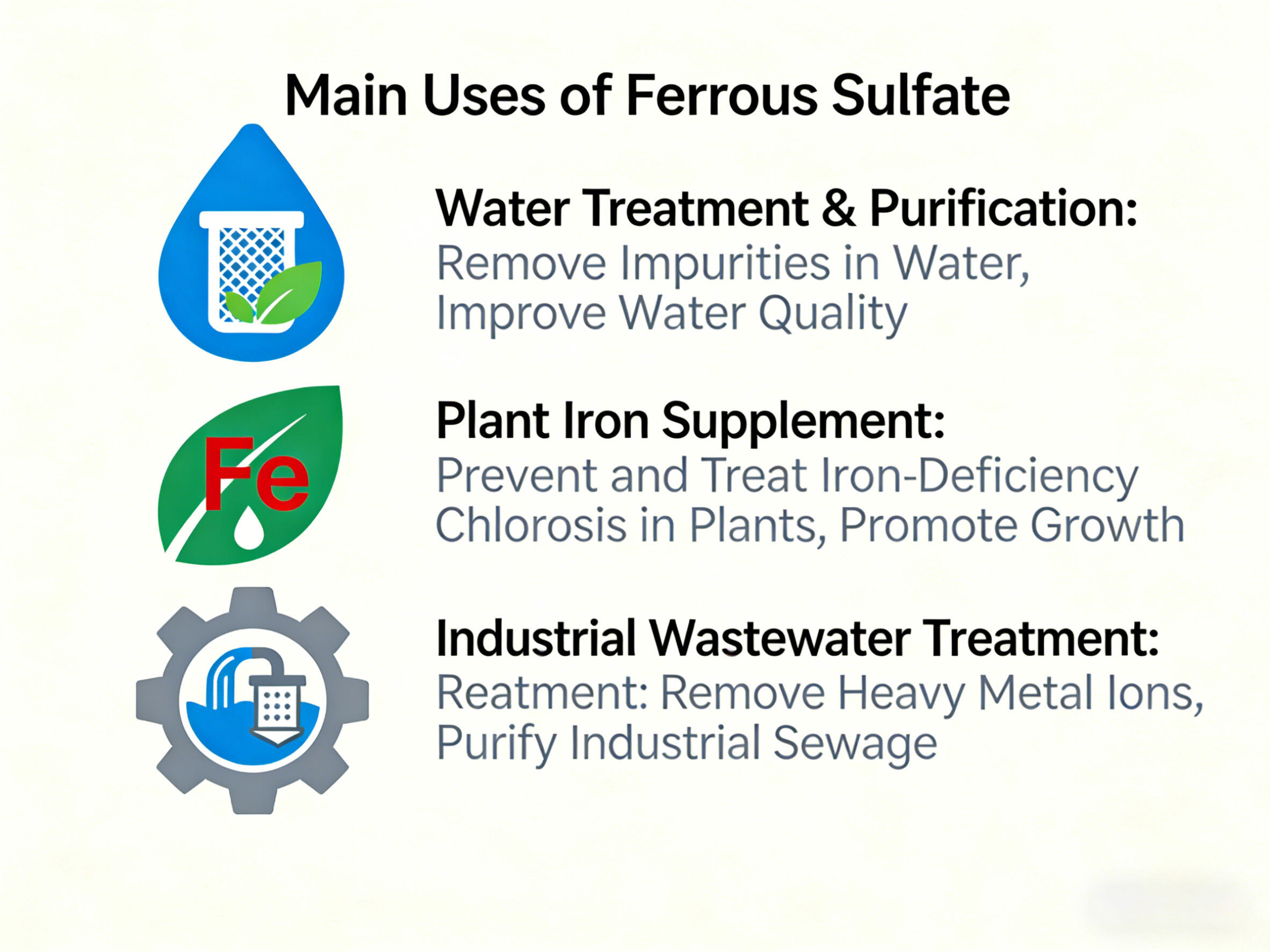
Ferrous sulfate has become really important in cleaning up our environment, especially when dealing with water treatment both in cities and industries. What makes this compound so useful is how well it works as a coagulant, pulling out phosphorus from water which helps stop problems like eutrophication and those annoying algal blooms. According to research published by the Water Environment Federation back in 2023, when used properly, ferrous sulfate can cut down on phosphorus levels by around 89%, though operators typically spend about $740 per kilogram for this service. Another big plus? It actually reduces hydrogen sulfide production in sewer systems by making soluble sulfides settle out, which means less corrosion and fewer bad smells coming from sewers. Groundwater systems benefit too since the iron released depends on pH levels, helping rebalance chemical processes and getting oxygen back into these underwater environments where life needs it most. Because of all these different applications, many experts consider ferrous sulfate essential not just for keeping surface waters clean but also meeting regulations regarding what goes into our waterways after industrial processing.
FAQ
What is ferrous sulfate commonly used for?
Ferrous sulfate is primarily used for the treatment and prevention of iron-deficiency anemia and is also extensively used in food fortification, agricultural soil correction, and environmental water treatment.
How does ferrous sulfate help in food fortification?
Ferrous sulfate is used to fortify staple cereals with iron, improving public health outcomes concerning anemia without altering dietary habits significantly.
How is ferrous sulfate used in agriculture?
Ferrous sulfate is used to correct iron deficiencies in alkaline soils, particularly benefiting high-value crops such as citrus and berries through methods like foliar sprays and soil application.
What are the environmental applications of ferrous sulfate?
It is utilized in water and wastewater treatment to reduce phosphorus levels and control hydrogen sulfide production, thereby preventing issues like algal blooms and sewer corrosion.