
 EN
EN

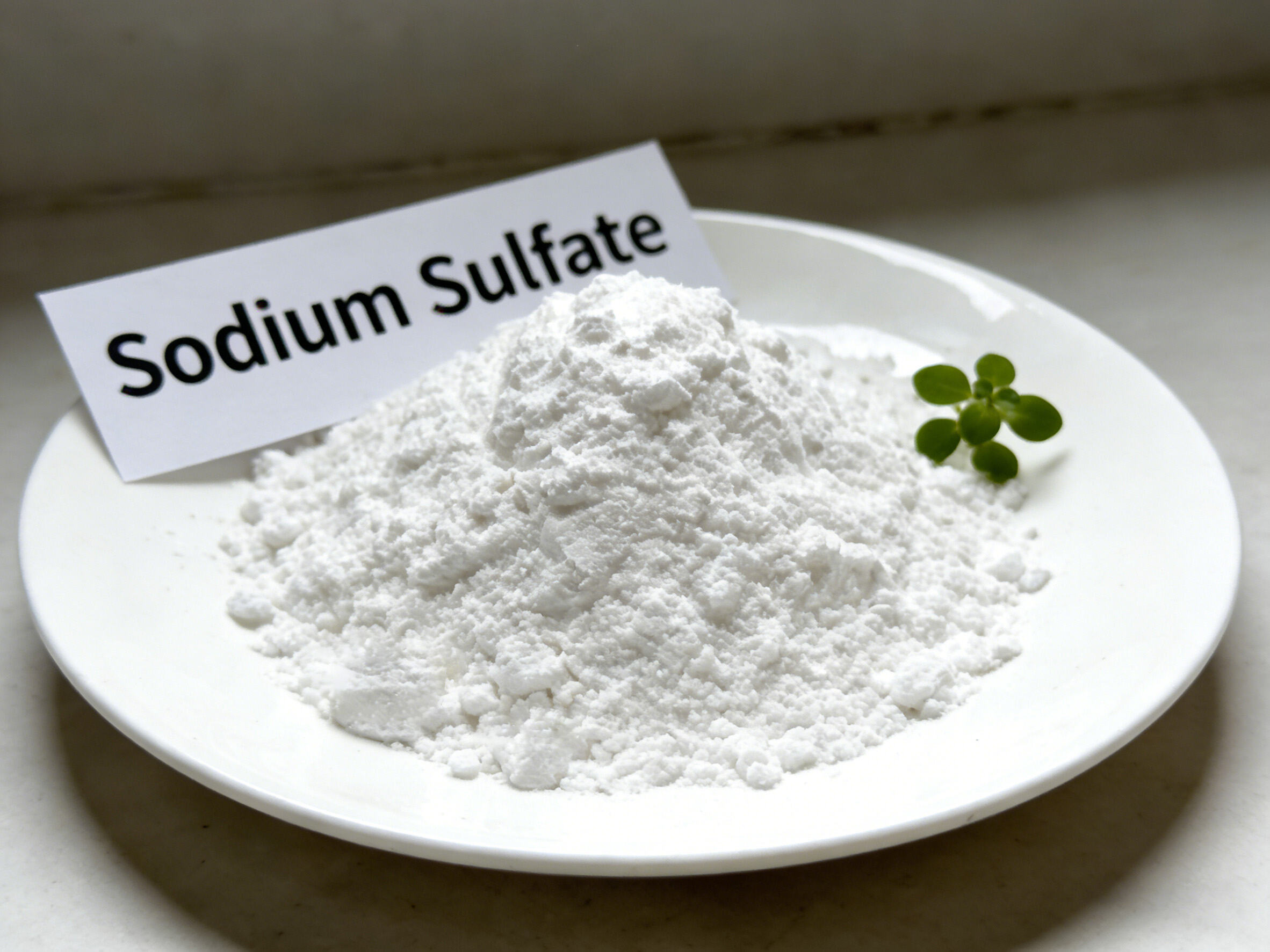
Chemical Purity and Assay Accuracy for Reliable Sodium Sulfate Performance
Na₂SO₄ Content, Moisture, and Insoluble Residue: Core Specifications for Anhydrous and Decahydrate Grades
The quality of sodium sulfate really depends on getting three basic parameters just right. The actual Na2SO4 content makes all the difference in how well it works. For industrial purposes, especially when making anhydrous grades, we need at least 99% purity to get reliable reactions in things like detergents, glass production, and various chemical processes. Then there's moisture control which matters just as much. Anhydrous forms should stay below 0.2% water content to avoid clumping and breakdown during storage periods. The decahydrate version (Na2SO4·10H2O) needs proper hydration levels too so it dissolves predictably when needed. Insoluble material has to be kept extremely low, under 0.05%, in premium quality products. If this limit gets exceeded, tiny particles can create problems like cloudy spots in glass manufacturing or issues with colorfastness in fabric treatments. Getting these specs right ensures consistent product quality from one batch to another across many different applications.
Critical Trace Impurities — Heavy Metals, Chlorides, and Iron — and Their Impact on End-Use Safety and Efficacy
Even when they exist only at parts per trillion to parts per million levels, trace impurities can have a huge impact on both performance and safety characteristics. For instance, heavy metals like lead and arsenic must stay under 10 ppm in pharmaceutical materials according to ICH Q3D standards because these substances pose serious health risks when administered through injections or taken orally. When chloride concentrations rise above 0.001%, stainless steel equipment starts developing pits during metal finishing processes. Iron contamination at just 5-10 ppm causes problems too - it yellows ceramic glazes and makes kraft pulp look dull after bleaching. Modern labs use techniques like ICP-MS and atomic absorption spectroscopy alongside ion chromatography to spot these tiny amounts of contaminants. These tests aren't just paperwork exercises; they actually prevent issues like oxidation damage, maintain product colors, and keep everything within legal boundaries. Without this kind of detailed checking, entire supply chains would face major quality control headaches down the road.
Physical Properties That Determine Sodium Sulfate Handling, Solubility, and Process Integration
Temperature-Dependent Solubility and Crystallization Behavior in Formulation and Recovery Applications
Sodium sulfate has what's called inverse solubility characteristics. When dissolved in water, it reaches maximum solubility around 32 degrees Celsius (about 49 grams per 100 milliliters) and then gets less soluble as temperatures drop below that point. This unique behavior makes it possible to recover sodium sulfate at very high rates from industrial wastewater through temperature changes. Many facilities achieve over 95% recovery of pure Na2SO4 crystals using thermal cycling methods, which cuts down on waste disposal expenses and helps create more sustainable processing systems. For pharmaceutical companies doing freeze drying operations, controlling these temperature transitions becomes absolutely critical. Without careful management, unwanted crystal formation can occur, ruining product consistency and dosage accuracy. The phase change at 32 degrees Celsius between the hydrated and non-hydrated forms of sodium sulfate plays a major role in how liquid detergent concentrates behave. If manufacturers let temperatures stray too far from this sweet spot, they'll end up with separated layers or inconsistent thickness in their products, making them harder to pump and shortening shelf life considerably. Getting a handle on all these temperature-dependent properties isn't just theoretical knowledge it directly impacts how well manufacturing processes work day to day across multiple industries.
Flowability, Bulk Density, and Particle Size Distribution for Consistent Dosing and Blending
How powders handle during processing makes all the difference when scaling up operations and getting consistent results in industrial blending setups. When we see a Hausner ratio below 1.25, that means the material flows really well which matters a lot for things like feeding into those fast moving tablet coaters or keeping colors consistent in continuous dye baths. Anything outside of plus or minus 2% variation starts causing problems with color matching. Take anhydrous sodium sulfate for example it packs nicely at around 1.4 to 1.5 grams per cubic centimeter thanks to controlled crystal growth. This actually cuts down on shipping costs by roughly 18% compared to other materials that aren't as dense, while still maintaining good mix quality throughout the batch. Getting particle sizes right is another key factor. Keeping most particles under 250 microns helps them spread evenly through cellulose pulp slurries, so there's no spot where too much coating builds up and weakens the final paper product. Most plants rely on fluid bed crystallizers or air classification systems to hit these specs, techniques that have stood the test of time across big kraft paper mills and detergent manufacturing facilities worldwide.
Regulatory Compliance and Grade-Specific Certification for Sodium Sulfate Applications
Pharmaceutical-Grade Sodium Sulfate: USP-NF, EP, and ICH Q3D Requirements
Sodium sulfate used in pharmaceutical applications needs to comply with strict international standards to protect patients and maintain the quality of drug formulations. Both USP-NF and EP set minimum requirements of at least 99% purity for the anhydrous form, while placing tight restrictions on contaminants. Heavy metal content should stay below 10 parts per million, arsenic under 3 ppm, chloride no more than 0.001%, and iron also capped at 0.001%. These limits follow guidelines from ICH Q3D regarding dangerous impurities and address real concerns about drug stability. For example, leftover iron particles can actually speed up the breakdown of active ingredients in pills and capsules through oxidation reactions. Another critical aspect involves proper documentation of how the crystals form during production. Different crystal structures might behave differently when dissolving in the body, which directly impacts how much of the medicine actually gets absorbed by patients.
Food-Grade (FCC) and Industrial-Grade (ACS, ISO) Sodium Sulfate Standards and Certificate of Analysis Essentials
Food-grade sodium sulfate conforms to the Food Chemicals Codex (FCC), permitting ≤2 mg/kg lead and regulating aluminum content for applications like dairy coagulation and wine clarification. Industrial grades follow application-specific benchmarks:
- ACS Reagent Grade: Validates ≤0.001% selenium via spectrophotometry per American Chemical Society protocols
- ISO 6353: Specifies standardized test methods for insoluble matter (<0.005%) and pH
- Technical Grade: Permits higher moisture tolerance (≤0.5%) than pharmaceutical grades but retains ≤0.05% insolubles
To meet compliance standards, a proper Certificate of Analysis needs to show actual numbers for important parameters compared against specific grade requirements, plus it should clearly link back to particular production runs. When dealing with regulated industries, these CoAs have to prove that everything follows current Good Manufacturing Practices too. That means keeping detailed records on how tests were conducted, making sure instruments are properly calibrated, and tracing reference standards all the way back to NIST or similar national measurement authorities. These requirements aren't just bureaucratic hurdles they're essential safeguards for quality control across different manufacturing sectors.
FAQ
What are the purity requirements for pharmaceutical-grade sodium sulfate?
Pharmaceutical-grade sodium sulfate must meet strict guidelines, such as a minimum purity of 99% for the anhydrous form. Heavy metals should be under 10 ppm, arsenic below 3 ppm, and chloride and iron capped at 0.001% each.
Why is temperature control important in sodium sulfate processing?
Sodium sulfate's solubility decreases with temperature drops, making it crucial to manage temperatures in processes like freeze drying and detergent manufacturing to prevent unwanted crystallization or layer separation.
What are the main trace impurities to monitor in sodium sulfate?
Key impurities include heavy metals such as lead and arsenic, chlorides, and iron. Their presence can impact safety, performance, and compliance with regulatory standards.
How does sodium sulfate's flowability impact industrial applications?
Good flowability with a Hausner ratio below 1.25 ensures efficient processing and blending, critical in applications like tablet coating and dye baths, allowing for consistent product quality and reduced shipping costs.